THE 6-STEP JOURNEY
From Concept to Capsule — Your Manufacturing Timeline
Each step has defined deliverables, quality gates, and client touchpoints. Here is exactly what happens during the 30-day manufacturing cycle at Bionial Lifesciences.
 Day 1
Day 1
Enquiry & NDA
Every manufacturing engagement begins with a conversation. The client shares their product vision — whether it is a new supplement concept, an existing formula they want to manufacture at scale, or a private label product built from our existing portfolio. We listen carefully to understand the commercial context: who is the target consumer, which retail channels are you targeting, what is the competitive landscape, and what is the expected launch timeline.
Once the scope is clear, a mutual Non-Disclosure Agreement (NDA) is signed to protect both parties' intellectual property. This is standard practice and ensures complete confidentiality for proprietary formulations, ingredient combinations, brand names, and business strategies. The NDA covers all information exchanged during the consultation, sampling, and production phases.
- Initial consultation covering target market, dosage form preference, and ingredient requirements
- Mutual NDA signed to protect client IP and proprietary formulations
- Quantity estimate and packaging format discussion
- No charge for initial consultation and feasibility assessment
Formulation Proposal
Our R&D team takes the client brief and conducts a systematic review against our database of 218+ ready-to-manufacture formulations and 50+ globally patented ingredient options. The goal is to identify the formula that best matches the client's product positioning, target market regulations, and budget constraints. If no existing formula fits perfectly, our formulation scientists design a custom formulation from scratch, selecting each active ingredient, excipient, and bioavailability enhancer based on clinical evidence and stability data.
Within 48 hours of the initial consultation, the client receives 2-3 optimized formula options. Each option includes a detailed ingredient breakdown with Certificate of Analysis-ready specifications, estimated cost per unit at various batch sizes, regulatory considerations specific to the target market (FSSAI for domestic, or destination-country requirements for export), and a recommended dosage form with rationale. This is not a generic template — each proposal is tailored to the client's specific requirements and market positioning.
- Review against 218+ formula database and 50+ patented ingredient options
- 2-3 optimized formula options with CoA-ready specifications
- Estimated cost per unit at multiple batch sizes
- Regulatory considerations for FSSAI, AYUSH, or export markets
- Recommended dosage form with bioavailability and stability rationale
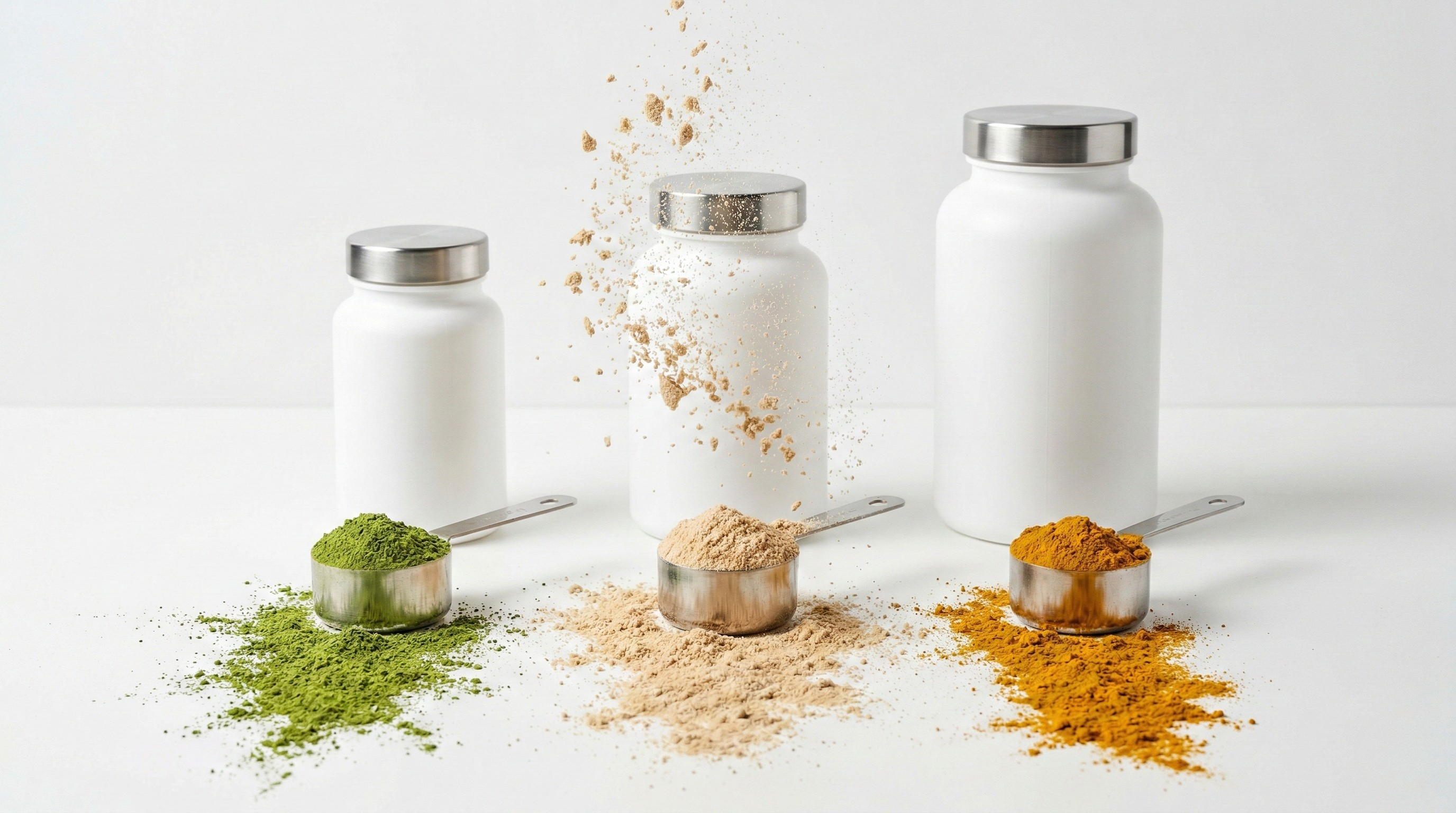
Sample Development
Once the client approves a formula option, our production team moves to bench-scale manufacturing. This is a small-batch production run designed to validate the formula under real manufacturing conditions before committing to commercial-scale production. The bench sample is produced using the same raw materials, equipment, and processes that will be used in the final commercial batch, ensuring that what the client approves at the sample stage is exactly what they receive at full scale.
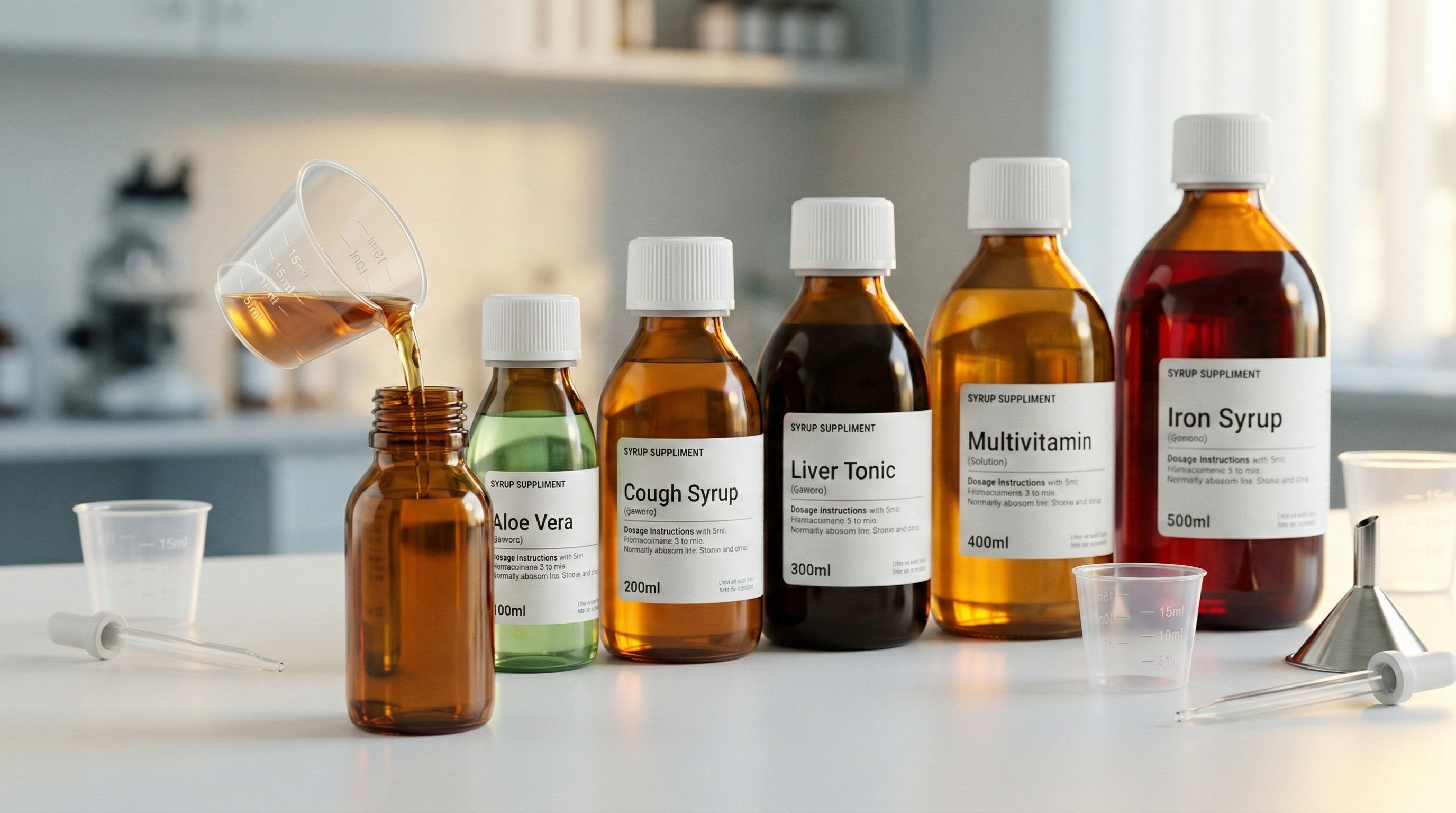
During sample development, our QC team documents every physical parameter that defines the product's quality profile. For tablets, this includes hardness, friability, disintegration time, dissolution rate, weight variation, and thickness. For capsules, we test fill weight uniformity, shell integrity, and dissolution. For syrups and liquid formulations, we verify viscosity, pH, clarity, and taste profile. All parameters are recorded in a formal Certificate of Analysis that accompanies the physical sample sent to the client.
- Bench-scale manufacturing of the approved formula
- Physical parameters documented: hardness, friability, disintegration, dissolution
- Certificate of Analysis prepared with full analytical data
- Physical sample shipped to client for evaluation and taste testing
- Excipient compatibility confirmed under accelerated conditions
Sample Approval
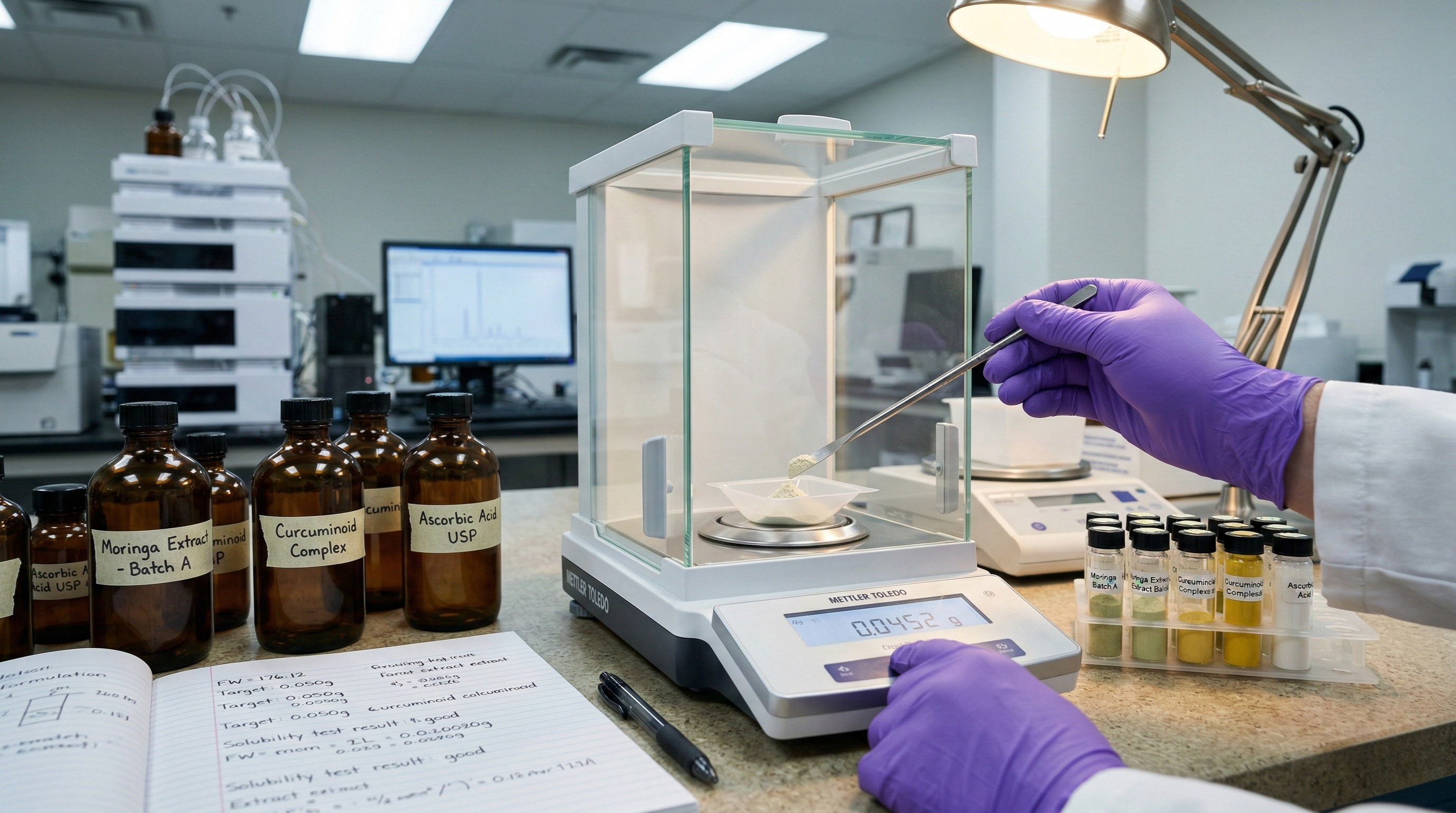
The client evaluates the physical sample, reviewing everything from the organoleptic properties (appearance, taste, odour, texture) to the analytical data in the Certificate of Analysis. This is a collaborative stage — most projects require one to two revision rounds, and these are already factored into our 30-day timeline. Common modifications include adjusting ingredient ratios for better efficacy claims, changing flavouring agents or coating materials, modifying tablet size or capsule colour for brand differentiation, or adjusting dissolution profiles for targeted release characteristics.
Each revision receives the same rigorous bench-scale manufacturing and analytical documentation as the original sample. Once the client is satisfied, the final formula is locked with a mutual sign-off document that specifies every parameter: ingredient list with exact quantities, physical specifications, analytical limits, packaging configuration, and labelling requirements. Stability-indicating analytical methods are established at this stage to ensure the product can be monitored throughout its shelf life. There is no additional charge for the first two revision rounds.
- Client evaluates physical sample and analytical data
- Typically 1-2 revision rounds (included in timeline, no extra charge)
- Final formula locked with mutual sign-off document
- Stability-indicating analytical methods established
- Packaging specification and labelling requirements confirmed
 Day 13 – 20
Pilot Batch Production
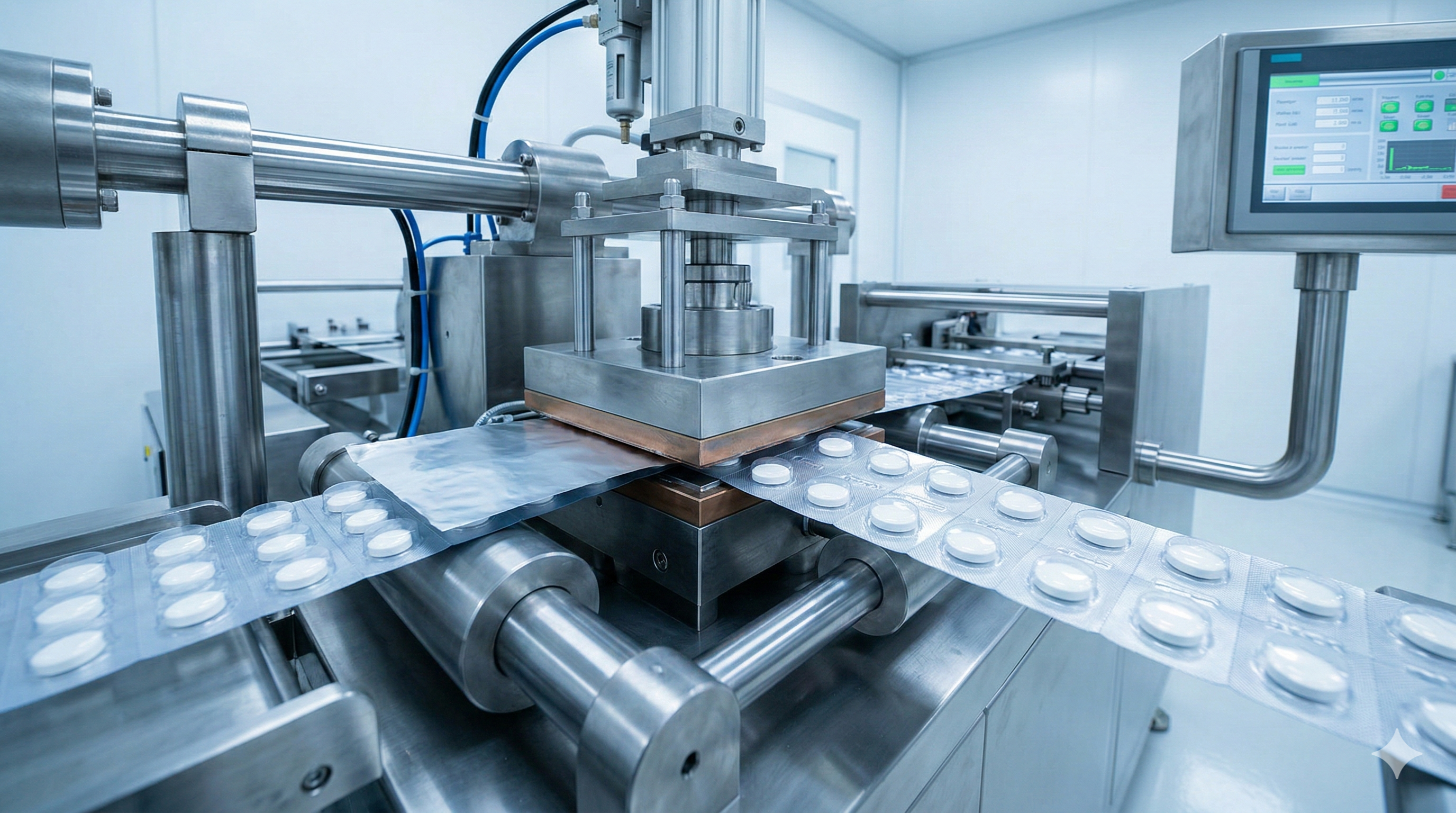
With the formula locked, production scales up to a pilot batch under full WHO-GMP conditions. The pilot batch serves two critical purposes: it validates that the bench-scale formula translates successfully to commercial production equipment, and it generates the first set of batch manufacturing records that form the foundation of the product's quality file. Every aspect of the production process is documented in a formal Batch Manufacturing Record (BMR) that traces the product from raw material receipt to finished goods.
In-process quality checks are conducted at every stage of the pilot batch. Raw materials undergo identity testing, assay verification, and microbiological screening before being cleared for production. During blending, samples are pulled to verify blend uniformity. During compression or encapsulation, weight variation, hardness, and disintegration are monitored at defined intervals. Content uniformity testing ensures that every unit in the batch contains the labelled amount of active ingredient within pharmacopoeial limits. Any deviation from specification triggers an immediate investigation and corrective action before production continues.
- Scaled production under full WHO-GMP conditions
- Raw material testing: identity, assay, microbial screening
- Blend uniformity verification at defined sampling points
- In-process checks: weight variation, hardness, content uniformity
- Complete Batch Manufacturing Record (BMR) documented
- Deviation management and CAPA protocols active throughout
Full Production & Dispatch
The final phase brings the product to full commercial batch manufacturing. All processes validated during the pilot batch are replicated at commercial scale, with the same rigorous in-process controls and documentation standards. The QC laboratory conducts the final release testing protocol on the finished batch, which includes a comprehensive panel of tests: identity testing (to confirm the product contains what the label claims), assay testing (to verify potency within specification), heavy metals analysis (arsenic, lead, cadmium, mercury per pharmacopoeial limits), microbial limits testing (total viable count, yeast, mould, and specific pathogens), and dissolution testing (to confirm bioavailability).
Only after the QC team clears the batch and the Quality Manager signs off on the Certificate of Analysis is the product released for packaging and dispatch. Packaging is executed per the client's specification — whether that is bulk drums for further packaging at the client's end, or finished retail-ready packs with custom branding, FSSAI-compliant labels, and tamper-evident seals. The shipment leaves our facility with complete batch documentation: Certificate of Analysis, Batch Manufacturing Record summary, raw material traceability records, and stability data where applicable.
- Full commercial batch manufactured at validated scale
- Final QC release: identity, assay, heavy metals, microbial limits, dissolution
- Certificate of Analysis issued and signed by Quality Manager
- Packaging per client specification (bulk or retail-ready)
- Dispatch with complete batch documentation package
- Post-dispatch stability monitoring initiated